
01
What it contains
Mifepristone and misoprostol are the active medicines commonly listed for Mifegest Kit.
A clear, evidence-based guide to Mifegest Kit, mifepristone and misoprostol, safety considerations, and the U.S. healthcare context.
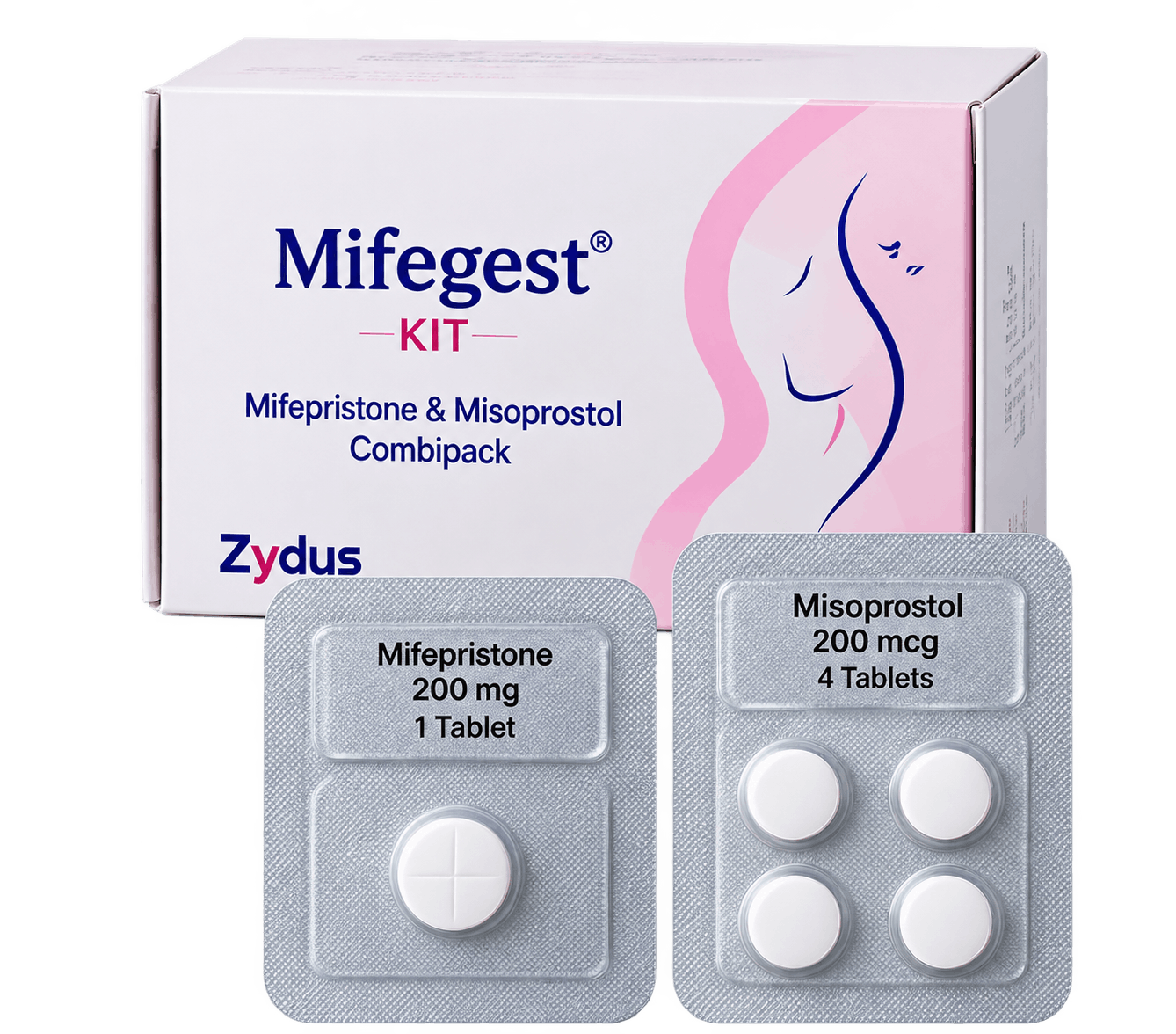
Mifegest Kit is marketed in some countries as a combination of mifepristone and misoprostol. It is used for medication abortion in appropriate clinical circumstances. Exact product labeling, availability and legal status depend on the country and product.
Use this page to understand the product, the active medicines, the U.S. regulatory context, and the questions to discuss with a qualified healthcare professional.
Mifepristone and misoprostol are the active medicines commonly listed for Mifegest Kit.
Mifepristone blocks progesterone; misoprostol causes uterine contractions.
Understand expected effects, contraindications and warning signs with professional guidance.
Get individualized guidance from an appropriate healthcare professional.
Mifegest Kit is a branded medicine marketed in some countries as a combination of mifepristone and misoprostol. Brand names and regulatory approvals vary by country, so the exact package and current labeling matter.
In the United States, FDA-approved mifepristone is used with misoprostol for medical termination of an intrauterine pregnancy through 70 days of gestation. U.S. prescribing and dispensing requirements apply.
Important: This page does not claim that a specific Mifegest-branded product is FDA-approved or authorized for U.S. sale.
The medicines have different roles. A qualified clinician should determine whether the regimen is appropriate and provide individualized instructions.
Mifepristone blocks progesterone, a hormone needed for an early pregnancy to continue.
Misoprostol causes the uterus to contract and helps the pregnancy pass.
Your healthcare provider should explain follow-up and what symptoms require additional care.
Cramping and bleeding are expected effects, but serious complications can occur. Follow your provider's instructions.
If you have an emergency, seek emergency medical care.
This form should be connected only to an appropriate, privacy-compliant healthcare intake system. Do not collect detailed medical histories in a general marketing CRM.
Your information stays confidential.
Our support team will get back to you soon.
Get general information and next steps.
Speak with a caring, knowledgeable team.
Direct answers to common questions, written for people and machine-readable search systems. FAQ structured data does not guarantee a Google rich result.
Mifegest Kit is a brand marketed in some countries as a combination of mifepristone and misoprostol. Brand labeling, approval status, availability and legal requirements vary by country.
Current product listings commonly identify mifepristone 200 mg and misoprostol 200 micrograms. Verify the exact packaging and current product labeling for the medicine in question.
Mifepristone blocks progesterone, a hormone needed for an early pregnancy to continue. In the United States, FDA-approved mifepristone is used with misoprostol for medical termination of an intrauterine pregnancy through 70 days of gestation.
Misoprostol causes the uterus to contract and is used with mifepristone in the FDA-approved U.S. regimen.
Do not assume a specific Mifegest-branded product is FDA approved in the United States simply because it contains active ingredients used in an FDA-approved regimen. U.S. approval applies to specific products and applications.
The FDA-approved U.S. regimen uses mifepristone followed by misoprostol. Mifepristone blocks progesterone; misoprostol causes uterine contractions that help the pregnancy pass.
The FDA states that mifepristone, when used with misoprostol, is approved for medical termination of an intrauterine pregnancy through 70 days, or 10 weeks, from the first day of the last menstrual period.
Yes. In the United States, mifepristone for medical termination of pregnancy through ten weeks is prescription medication and is subject to the Mifepristone REMS Program.
The FDA REMS does not require an in-person visit before mifepristone is prescribed. State law, clinical assessment, provider certification and emergency-care arrangements still matter.
Do not assume an imported or foreign-branded product is part of the legitimate U.S. drug supply chain. The FDA advises obtaining mifepristone through the authorized U.S. pathway and not buying it outside the REMS.
Cramping and vaginal bleeding are expected effects. Nausea, weakness, fever or chills, vomiting, diarrhea, headache and dizziness can also occur.
Seek urgent medical attention for symptoms such as very heavy bleeding, severe or persistent abdominal pain, fainting, sustained fever, or feeling seriously unwell. Follow the emergency instructions from your healthcare provider.
No. Medication abortion is not a treatment for an ectopic pregnancy. Appropriate clinical assessment is important when ectopic pregnancy is possible.
Tell your healthcare provider about an IUD before treatment. The provider can determine the appropriate next step.
Your clinician should explain the appropriate follow-up process and how to confirm that treatment was successful.
Use authoritative sources such as the FDA for U.S. regulatory information and a qualified healthcare professional for individualized medical advice.
No. This page provides general educational information and is not a diagnosis, prescription, or individualized treatment plan.
The FDA's current REMS information states that mifepristone may be dispensed in person or by mail by an authorized pathway, subject to the REMS and applicable law.
Have questions about Mifegest Kit, medication abortion, safety, eligibility, or what to expect? Get general information and support through our private chat.
Get help with common questions
Your conversation stays confidential
Clear and respectful information
For general information and support only. WhatsApp is not a substitute for emergency medical care.